
Collaborative Depression Care Program
Personalized Depression Treatment in North Texas
The presenting symptoms of depression vary greatly from one person to another. One may sleep too much while another can't sleep at all, one person may be crying while the other wears a smile and pretends like nothing is wrong. Some people don't even feel sad or depressed, but rather have no interest or joy in life. Seeking depression treatment in North Texas is the best course of action no matter where you fall on the spectrum.
Our six-month Collaborative Depression Care Program brings psychiatry, medication management, therapy, TMS therapy, diagnostic testing and ongoing care together in one treatment plan. We are committed to helping you find lasting relief from depression and anxiety, one step at a time. Our mission is to provide you with compassionate, personalized depression treatment tailored to your unique needs, ensuring that you receive the best possible experience.
Depression Care at Salience Health
Understanding Your Health

Imagine having a dedicated team of professionals—psychiatrists, therapists, primary care physicians, and care managers—working together just for you. They are not just depression and anxiety experts; they are compassionate allies, committed to creating a treatment plan that speaks to your unique struggles and hopes.
The Collaborative Depression Care Program takes a comprehensive approach to fully understanding your mental and physical health. Through clinical evaluations, lab testing, cognitive assessments, and a review of your symptoms and treatment history, our team works to identify factors that may be contributing to your depression.
Our Approach to Treating Depression
Our powerful depression treatment options in North Texas include cutting-edge TMS Therapy, transformative Cognitive Behavioral Therapy, and personalized medication management. We blend these advanced treatments with our collaborative care model to support every aspect of your well-being, offering you a comprehensive and effective path to remission of your depression and anxiety symptoms.
Depression rarely has a single cause. Biological, genetic, environmental, and situational factors can all play a role, and symptoms may develop gradually or appear after a major life change, loss, or period of prolonged stress. Your evaluation may include clinical assessments, lab testing, cognitive evaluations, and a review of your symptoms and treatment history to help identify factors that may be contributing to depression, including:
- Biological and genetic factors
- Current and past medications
- Co-existing medical conditions
- Stress-related contributors
- History of trauma
- Sleep patterns and lifestyle factors
- Social support
Our team will build a customized treatment plan based on the most current medical evidence.

Patient Centered Care
Depression can affect your mental, physical, and emotional health in a variety of ways. At Salience, our patient-centered approach focuses on fully understanding your symptoms, health history, previous treatments, and personal goals. Our commitment goes beyond treating symptoms; we are dedicated to addressing the unique needs and concerns of each individual on their journey to mental well-being.
- Holistic Assessment
- We begin with a thorough assessment of your physical and mental symptoms. This information allows your care team create an understanding of your health and identifying appropriate treatment options.
- Personalized Treatment Plans
- No two individuals are alike, and neither are their experiences with depression. Your depression treatment plan is developed based on your diagnosis, medical history, and previous treatment experiences. Our treatment plans are meticulously crafted to meet your unique needs.
- Collaborative Decision-Making
- Your voice matters. You are an active participant in your mental health care. Together, we create a plan that aligns with your goals, preferences, and comfort level.
- Open Communication and Support
- We strive to create a safe space where you feel heard, understood, and supported throughout your entire treatment experience.

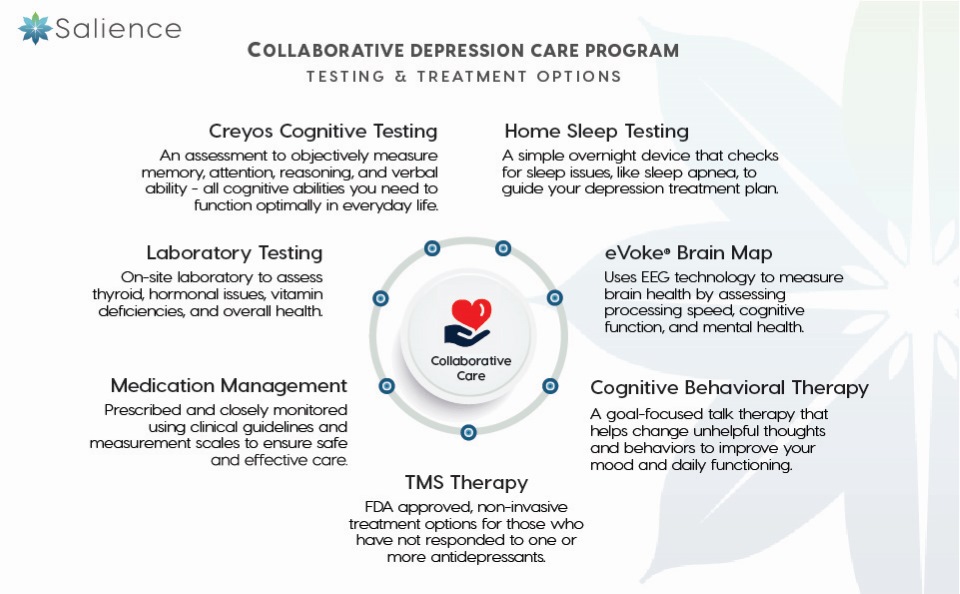
Depression Care Testing & Treatment Options
Through our Collaborative Depression Care Program, your care team may recommend a combination of testing and treatment based on your symptoms, health history, and goals.
Testing and Evaluation
- Laboratory testing: Our on-site lab can check for thyroid and hormonal issues, vitamin deficiencies, and other aspects of your overall health that may contribute to depression symptoms.
- Creyos cognitive testing: This assessment measures memory, attention, reasoning, and verbal ability, which are cognitive skills that can be affected by depression and are important for everyday life.
- eVoke® brain mapping: Using EEG technology, this assessment measures brain activity related to processing speed and cognitive function to help inform your treatment plan.
- Home sleep testing: A simple overnight device checks for sleep issues such as sleep apnea, which can affect mood and help guide your depression care.
Treatment Options
- Medication management: Your psychiatric provider prescribes and closely monitors medications using clinical guidelines and measurement scales, adjusting your plan as needed.
- Cognitive Behavioral Therapy (CBT): A goal-focused talk therapy that helps you identify and change unhelpful thought and behavior patterns that affect your mood and daily functioning.
- TMS Therapy: A noninvasive, FDA-cleared treatment option for adults with depression who have not responded to one or more antidepressant medications.
The Many Faces of Depression
Major Depressive Disorder
Also known as clinical depression. Severe and persistent low mood or loss of interest in activities lasting at least two weeks. Can include changes in sleep, appetite, fatigue, trouble concentrating, and other symptoms.
Seasonal Affective Disorder
A type of depression that is often triggered by the changes of the seasons, typically starting at the same time each year. Common symptoms include low energy, oversleeping, weight gain, and social withdrawal.
Persistent Depressive Disorder
PDD is a chronic form of depression that can last for at least two years in adults. Symptoms of persistent depressive disorder can be less intense that major depression, but they are continuous and long-lasting.
More Severe Symptoms Include:
Suicidal ideation, significant loss of daily functioning, psychotic features, changes in speech, intense hopelessness, and withdrawal. Help is available. Contact Salience Health today to talk with our team about depression care options.
Patient Education Library
Explore our comprehensive library of resources designed to support your journey with depression and anxiety. Each topic aligns with your mental health goals, providing practical guidance, educational materials, and worksheets you can print to help you take the next step toward wellness..
Frequently Asked Questions (FAQ) About Treating Depression
Severe depression (major depressive disorder) involves intense, persistent symptoms that last nearly every day for at least two weeks and significantly impair daily functioning. Key symptoms of severe depression can include: persistent feelings of sadness, emptiness, hopelessness, or tearfulness, severe anxiety, agitation, restlessness, or frequent angry outbursts.
Yes, you can live with depression. Many people manage the condition and lead full, meaningful lives using a combination of medical care, lifestyle changes, and support systems. People manage depression in their daily lives through treatments like talk therapy, medication, lifestyle adjustments, and connecting with a support network.
To better serve you and streamline our communication channels, we kindly request that you submit Medication Refill requests through the Salience Health Patient Portal. The link is located at the top of this page. This allows for efficient processing and ensures timely refills of your medications.
If you have any questions or encounter any difficulties with the portal, please do not hesitate to reach out to our office for assistance at 469-379-8222. Our team is here to help and ensure you receive the medications you need promptly.
Yes. Living with a chronic condition like diabetes, heart disease, or multiple sclerosis can take a real toll on your mental health, and depression often makes managing a chronic illness harder. Our Plano team provides psychiatric evaluations, medication management, and treatment options such as TMS therapy, and we can coordinate with your primary care physician or specialist so your care stays connected. Learn more about the link between chronic illness and depression.
Yes. Our Plano clinic provides mental health care for people ages 16 and up, including high school and college students navigating anxiety, depression, ADHD, and the stress that often comes with academic demands. Our team creates a supportive space for young people to share what they’re experiencing and works with families to build a care plan that fits.
The Care Navigator Team. Your New Partners for Comprehensive Care
Our Care Navigator team guides you through your treatment plan and is your point of contact for all questions and coordination you need. They are here to help connect you to services, educate you, and coordinate care with your providers.
Your First Appointment at Salience
Your initial appointment is a deep dive into your medical history, emotional challenges, and individual situation. This meeting will be your longest to ensure that we collect all the necessary information. This is essential to make an accurate diagnostic assessment and optimize your treatment planning.
Compare the difference
Standard Psychiatric Care
- Isolated Psychiatric Care
- Limited Treatment Options
- Communication Barriers
- No Collaborative Care
- No Progress Measurements
- Relying on One Person for Your Care
The Salience Health Model
- Unified Care Team
- Multiple Treatment Options
- Providers all Work Under One Roof
- Sharing Information and Collaboration
- Measurement Based Care
- Multiple Providers for the Best Behavioral Healthcare Available


